Sunday, July 28, 2013

Photographic Inspiration


An email came in yesterday from a reader asking where I found my photographic inspiration, especially now in the middle of a statewide drought. Under conditions like this it's easy to become creatively lethargic since all the "low hanging fruit" of your creativity has been picked clean.


My inspiration comes from many sources including other blogs, books and magazines. Even though several portions of central Texas are under severe drought there are still some great photographic opportunities to be had. Texas is a big place and the upper lakes region of the Colorado river (Inks Lake, Lake LBJ) seem to be doing much better than other areas west of Austin. There are several really great spots for sunrise and sunset shots around Marble Falls / Kingsland as well Enchanted Rock, which is beautiful at almost any time of the year.


Last weekend I went to Goliad to shoot the two Missions and got back with some really nice exposures like the image below. Later this week I'm headed back to the western edge of the Hill Country (Garner State Park, Lost Maples State Natural Area, Hill Country State Natural Area and the Guadalupe River State Park) to scout alternate locations for my fall workshop.
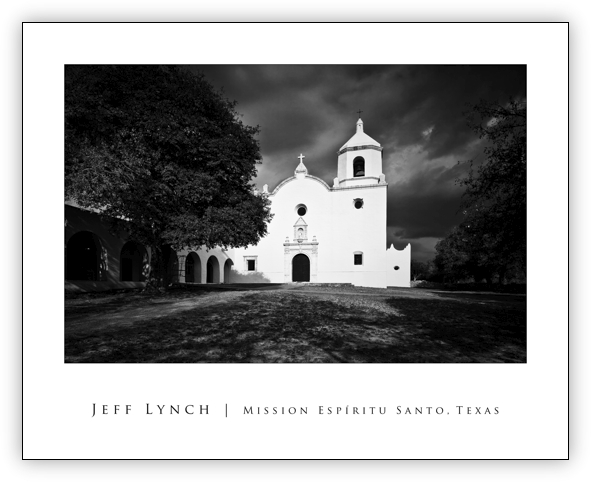


Mission Espiritu Santo


Mission Espiritu Santo in Goliad, Texas
Copyright 2009 Jeff Lynch Photography
Shot taken with a Canon EOS 5D Mark II set on aperture priority (Av) using an TS-E 24mm f/3.5L II lens tripod-mounted. The exposure was taken at 24mm, f/16 for 1/50th of a second using a Singh-Ray 2-stop, graduated neutral density filter at ISO 100 on Lexar Professional digital film. Post capture processing was done in Lightroom 2 and Photoshop CS4 using Nik Software's Silver Efex Pro filter. Click on the image above for a larger version.


Check out some of Wyman Meinzer's books on Amazon. He's the best known Texas photographer and has travelled the state for years in all sorts of conditions. His images continue to inspire me daily. Pick up a copy of Texas Highways or Texas Parks & Wildlife magazines while you're at it. There's always two or three great spots featured in each issue.


If you really get stuck, try the local arboretums or even a nursery on a cloudy day. You can always get some great shots of flowers and plants in places like this. Even in the most bone-dry, barren areas, there are always photographic opportunities if you have an open and relaxed outlook. If you get really (Really) stuck, just send me an email. I'm more than happy to share any of my favorite spots in this great state of Texas!


Posted in Photography Tagged: Canon, Canon 5D Mark II, Inspiration, Landscape Photography, Mission Espiritu Santo, Photography


Texas Landscape Safari Update


It's finally raining here in Texas and that means the Texas Landscape Safari will be taking place as planned on October 19th - 21st, 2009. This not your usual photography workshop. It's more like a bunch of friends getting together to share their love of landscape photography and help each other grow as serious amateur photographers. It's a chance to visit and photograph some of the most beautiful spots in the Texas Hill Country and to learn some basic techniques to enhance your landscape photography behind the camera and in the digital darkroom. The price of this workshop is $250 per person (price includes instruction only). I charge just enough to cover my expenses and if you're not completely exhausted (but satisfied) at the end of the workshop, I'll gladly refund your money!


For more information or to register, please contact me via email using the "Contact Me" page located on this blog.


We will be shooting at the following state parks and key locations during the four day / three night workshop.


  • Colorado Bend State Park - Bend, Texas
  • Inks Lake State Park - Burnet, Texas
  • Longhorn Cavern State Park - Burnet, Texas
  • Enchanted Rock State Natural Area - Fredericksburg, Texas
  • Pedernales Falls State Park - Johnson City, Texas
  • McKinney Falls State Park - Austin, Texas

We will be staying overnight at the following locations to be as close to the action as possible.


  • Holiday Inn Express - Lampasas, Tx on Sunday October 18, 2009
  • Best Western Marble Falls Inn - Marble Falls, Tx on Monday October 19, 2009
  • Best Western Johnson City Inn - Johnson City, Tx on Tuesday October 20, 2009

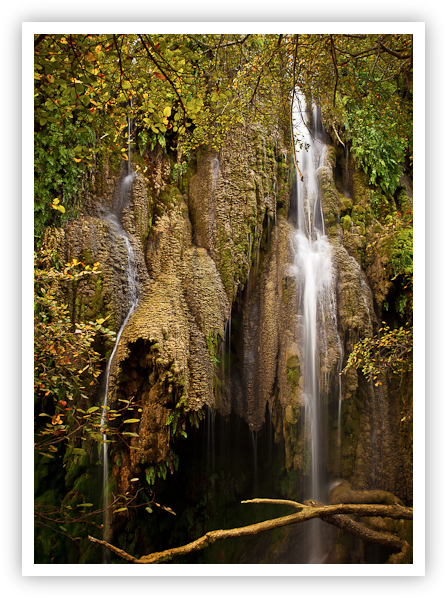
Gorman Falls Morning


Gorman Falls Morning - Colorado Bend State Park, Texas
Copyright 2009 Jeff Lynch Photography
Shot taken with a Canon EOS 40D set on aperture priority (Av) using an EF 24-105mm f/4 L IS USM tripod-mounted with a Singh-Ray Vari-ND neutral density filter attached. The exposure was taken at 40mm, f/16 for 0.8 seconds at ISO 100 on Sandisk digital film. Post capture processing was done in Lightroom 2. Click on the image above for a larger version.


Posted in Photography Tagged: Canon, Canon 40D, Landscape Photography, Texas Landscape Safari


Saturday, July 27, 2013

Landscape Photography is Hard Work!


Landscape Photography is Hard Work!


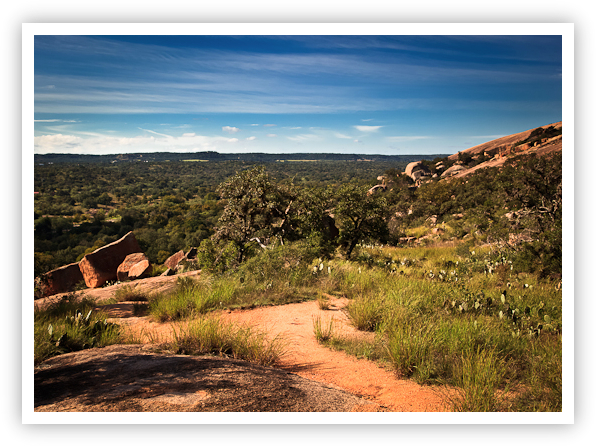
Not really, but after a beautiful morning hiking all over Enchanted Rock State Natural Area, the legs and back do get a wee bit sore. Nothing that a quick pint of Shiner Bock and some good German food in Fredericksburg won't cure. Come and join me this spring for the Texas Landscape Safari and see for yourself.


The Trail


The Trail Home - Enchanted Rock, Texas
Copyright 2009 Jeff Lynch Photography
Shot taken with a Canon EOS 5D Mark II set on aperture priority (Av) using an EF 24-105mm f/4L IS USM lens tripod-mounted. The exposure was taken at 40mm, f/8 for 1/125th of a second using a Singh-Ray warming polarizer at ISO 100 on Lexar Professional digital film. Post capture processing was done in Adobe's Lightroom 3 Beta. Click on the image above for a larger version.


Posted in Photography Tagged: Canon, Canon 5D Mark II, Enchanted Rock State Natural Area, Photography, Texas Landscapes


Getting Used to Your New DSLR!


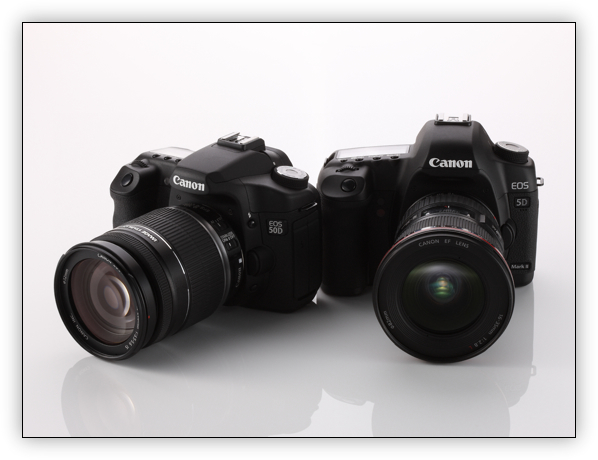
Getting used to a new DSLR camera can be a daunting task, especially for folks moving from an APS-C to a full-frame sensor. Most of us that began our photographic journeys with a 35mm SLR felt a little "cramped" the first time we used a "crop body" DSLR like the original EOS Digital Rebel. We had to get used to the smaller, darker viewfinder and the much more narrow field of view. All of these things made us "adjust" our photographic "style" to accommodate the new medium, but adjust we did.


EOS 5D Mark II & EOS 50D


Today, folks that move from "crop body" DSLR cameras to their full-frame counterparts are experiencing a similar adjustment period and finding it a little disconcerting. Their favorite zoom lens doesn't seem to "reach" as far as it once did and their wide angle lenses are not nearly as sharp around the edges as they once were. Many folks find themselves frustrated with images that just don't seem as sharp and they begin to question their decision and the large sum of money they've just spent.


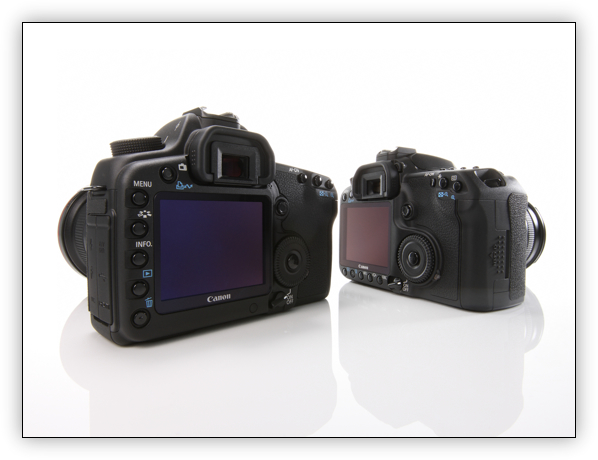
EOS 5D Mark II & EOS 50D


When I first started shooting with a 5D Mark II, I would swear that my 50D was producing sharper (raw) images using the same, high quality (L Series) lens. I couldn't understand why my 5D2 s landscape shots at f/8 looked much "softer" than those taken with my 50D. I couldn't comprehend why all my hand-held shots looked much softer than those taken with my 50D. What the hell was going on?


For those of you out there having this experience please know that you're not alone. And please understand that it takes weeks and sometimes months to "learn" how to use your new full-frame camera and to "unlearn" some bad habits created by using a crop body camera. Here are a few key points to remember:


  • The higher the resolution your sensor is, the more sensitive it is to camera shake. The old adage of using a tripod below 1/125th of a second shutter speed becomes a vital rule when shooting with a full-frame DSLR.
  • Don't let anyone mislead you. The depth of field obtained by a full-frame sensor is MUCH narrower than that of an APS-C sensor. Shooting at f/8 and "hoping" that everything in your scene will be in focus just doesn't work on a full-frame sensor. Try shooting at f/11 - f/13 and setting your focus point 1/3rd of the way in the scene (hyperfocal rule) for best results.
  • Learn to zoom with your feet. Your 100mm lens is really a 100mm lens now, not the 160mm you've been used to. On the flip side, your 24mm wide angle is now REALLY wide!
  • Finally, the most important tip. Your 21 MP, full-frame sensor will distinctly present any shortcomings of your lenses in sharpness, contrast and chromatic aberrations. Trust me on this folks, your "consumer grade" zoom lens that you paid less than $500 for is NOT going to produce images on your new 5D Mark II that you'll be proud to exhibit. Full-frame cameras really do need "professional grade" lenses.

One final thought on this topic. Practice with your new full-frame camera as much as possible. Make it your job to try different things and then review what works and what doesn't during your post-capture processing. I'm a firm believer in the old saying, "Practice Makes Permanent, So Practice Right". Use the correct shutter speed and aperture for each situation and immediately review your shots on the camera's LCD screen to check for focus. Always use proper hand holding technique (Google Joe McNally "Da Grip") and whenever possible use a tripod.


Learn how to make your new full-frame camera perform to it's fullest potential and enjoy the journey. Learning for a lifetime is a gift from God!


Posted in Photography Tagged: Canon, Canon 50D, Canon 5D Mark II


Thursday, July 25, 2013

Gorman Falls


For more information on the history of Gorman Falls please visit Flying Hats over Gorman Falls by Jack Matthews. The following excerpt is used by permission of the author.


Gorman Falls is located in San Saba County, along the Colorado River, downstream from Bend, Texas, and above Lake Buchanan. Since 1984, Gorman Falls has been managed, fortunately, by the Texas Parks and Wildlife Department. An artesian spring, ejecting about three-hundred gallons a minute, provide hand-cramping cold water for the falls. The spring is about one-quarter of a mile up from the falls. The sound of the waterfall is loud, a low roar, back down by the cliffs, as you walk under a canopy of sycamores, cottonwoods, and pecan trees that give shade, plunging the ambient temperature ten degrees or more. The temperature change is so vivid, it is like opening the refrigerator in the house after working outside in the heat. It is no wonder that the Comanche, the working cowboys of the Gorman and Lemons Ranches, planned their day to be close to the falls when toil eased at mid-day or stopped in the evening, so that the cool air and artesian water might ease their muscles or give good medicine to the tribe.


I know of these things, maybe not the Comanche camp, by listening to my grandmother who tended the chuck wagon for her husband who managed cattle for the ranches. My grandmother, Effie, took me to the falls many times, always pointing out on the downhill slope to Gorman Falls, “That’s where we camped and set up the wagon, built a fire right there.” And, I would look and see bleached rocks and junipers, a clearing in the trees, and, yes, the remnants of a fire, her fire, many layers below. I thought of the cowboys who herded cattle, sitting down and eating beans, cornbread, and beef that my grandmother cooked. She was not that tough of a woman, of a person, to fix grub on the ranches, but she did. She followed my grandfather because she loved him and would cook for him and his pardners, as they tended cattle in the blazing hot, anvil-hard earth, Texas sun. Gorman Falls, with its cool, artesian water, was Beulah land, paradise, relief beyond belief, for them, for me.


Gorman Falls


Gorman Falls – Bend, Texas
Copyright 2009 Jeff Lynch Photography
Shot taken with a Canon EOS 5D Mark II set on manual (M) using an EF 24-105mm f/4L IS USM lens tripod-mounted. The exposure was taken at 35mm, f/14 for 1.3 seconds at ISO 100 using a Singh-Ray LB Vari-ND-Duo neutral density filter. All post capture processing was done in Adobe’s Lightroom 3 Beta. Click on the image above for a larger version.


How To Get this Type of Shot: An image of water cascading down with that smooth, almost silky look to the water.


  • The real key to this shot is the location. Gorman Falls located in the Colorado Bend State Park near Lampasas, Texas is one of the most beautiful spots in the state to photograph. Its well protected location offers a pristine look at one of Texas’ secret hideaways.
  • As with most running water, the key is the long exposure (greater than 1 second) that creates the smooth, silky look. You have two choices in how to achieve the long exposure; a) use a very small aperture like f/22 or b) use a neutral density filter.
  • A wide-to-medium telephoto lens is a good choice for a shot like this since it allows you to capture many different shots from one spot.
  • A good sturdy tripod is a must in a situation like this. I recommend a carbon-fiber tripod for this shot since you’ll be lugging it several miles under the Texas sun to get this shot.
  • As before, the final key for this type of shot is setting your camera’s long exposure noise reduction to “ON”.
  • Shooting at Gorman Falls is best done in the early morning when the light just begins to filter through the trees. Spring and Fall are usually the best times of the year to capture great shots at the falls although a few brave souls have been known to visit during the heat of a Texas summer.

Posted in Photography Tagged: Canon, Canon 5D Mark II, Colorado Bend State Park, Gorman Falls, Photography, Texas Hill Country, Texas Landscapes


Gold Rush


I did NOT recolor this image in Lightroom or Photoshop. I did NOT change the white balance from “daylight” to “cloudy” or crank up the saturation to enhance this image. All I did was get incredibly lucky to have the perfect late afternoon sun hitting these limestone falls AND reflecting off the clouds overhead to create a wonderful golden glow to work with. Like my previous image taken just a bit later, this shot was one of those wonderful accidents of nature, when everything comes together.


You can’t plan for it. You can’t practice for it. And you can’t depend upon it happening. All you can do is say a prayer of thanks for the opportunity to capture it and share it with others.


Gold Rush – Austin, Texas
Copyright 2009 Jeff Lynch Photography
Shot taken with a Canon EOS 5D Mark II set on manual (M) using an EF 24-105mm f/4L IS USM lens tripod-mounted. The exposure was taken at 40mm, f/16 for 2.5 seconds at ISO 100 using a Singh-Ray Vari-ND-Duo neutral density filter. All post capture processing was done in Adobe’s Lightroom 3 Beta. Click on the image above for a larger version.


Posted in Photography Tagged: Canon, Canon 5D Mark II, Landscape Photography, McKinney Falls State Park, Photography, Texas Hill Country, Texas Landscapes


Wednesday, July 24, 2013

Sunset in Kingsland


It’s been bitter cold here in Texas and I’m getting tired of wearing sweaters every day. So here’s an image taken last fall at one of the best spots in the state to capture a sunset, looking west over Packsaddle Mountain. I’m going to keep posting these “warm” images until the weather breaks or I run out of shots, whichever comes first.


Sunset in Kingsland


Sunset – Kingsland, Texas
Copyright 2009 Jeff Lynch Photography
Shot taken with a Canon EOS 5D Mark II set on aperture priority (Av) using an EF 24-105mm f/4L IS USM lens tripod-mounted. The exposure was taken at 45mm, f/13 for 2 seconds at ISO 100 using a Singh-Ray 3-stop (soft) graduated neutral density filter. All post capture processing was done in Adobe’s Lightroom 3 Beta. Click on the image above for a larger version.


Posted in Photography Tagged: Canon, Canon 5D Mark II, Landscape Photography, Photography, Texas Hill Country, Texas Landscapes