Thursday, March 26, 2015

Friday, December 26, 2014
Amos Chapple’s Photographs of the Coldest Town on Earth

Globetrotting photographer Amos Chapple has shot in sixty countries, eventually working his way up to be named Cathay Pacific's Travel Photographer of the Year for '09. More recently, New Zealand native Chapple photographed a region with weather very opposite from that of his home country: Oymyakon, Russia, where the average winter temperature is negative-58 Fahrenheit (negative-50 Celsius).


MORE PHOTOS
Need hosting? Design You Trust is proudly supported and hosted by WebHostingBuzz Premium Infrastructure & Network.
Monday, October 27, 2014
Tuesday, June 17, 2014
Travel Photography Essentials
Travel photography is all about knowing your essentials. It's important to pack light and be quick on your feet, but it's doubly important to really know your gear. Bringing a cool new device, whether it be a new camera body or a simple filter, is not a great idea. To ensure a fail proof shoot, bring the gear you trust.
Each trip and adventure is different. As a result, items are added and subtracted from my gear bag depending on the exact nature of the journey. When I'm on a boat up in Alaska, for example, I'll add a 300mm f/2.8 and a 2x. If I'm someplace "funky," I'll maybe bring a fisheye or maybe a macro for those small details. With that said, here is my essential travel gear.
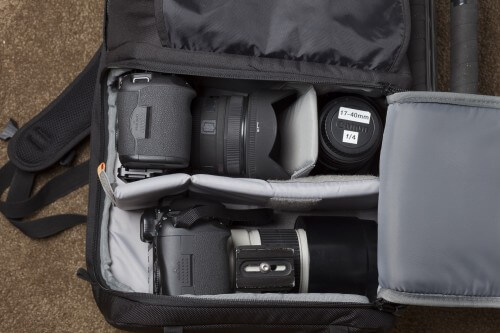
I never travel on a major trip with only one camera, and I don't count my phone as a camera either (at best it's a back up to the back up). My main camera is a Canon Mark III which I'll use for about 80-90% of the shots. From time to time it's nice to have a second camera ready without changing lenses and that's where the 7D plays a part.
It can also be helpful when needing a longer reach for wildlife or sports type action. And of course it's the back up should something happen to the Mark III. I use black electrical tape to cover as many logos and unnecessary markings to tone down the appearance.
Pro Tip #1
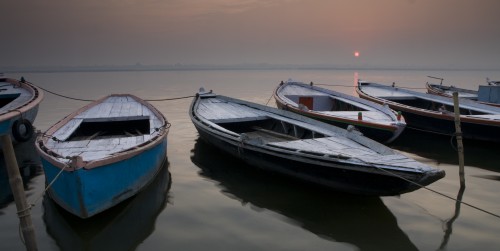
The key to this photo is a super slow shutter and a high F-stop. There was an abundance of light in the background whereas the beach had very little. A tripod would be preferable in this situation, but I just used my 24-70mm lens with an f/22, ISO200 and exposure. Also, having my Rocket Blower and cleaning supplies came in handy in this particular situation. After a day on the beach, I spent the beginning stages of this sunset cleaning!
I love the f/4 zooms. They are lightweight, constant aperture and very sharp. Are they the sharpest money can buy? No, but they are more than good enough for my needs.

The 50mm is great for street shooting. I prefer it over the 35mm as I don't like intruding on people’s personal space. When travelling, we often forget that we are entering a new society. Sometimes that slight difference, when you need to get a bit closer to get everything in frame (with a 35mm), you can disrupt the people and life in front of you.
I usually chose to bring 3 extremely different lenses. I like to bring 3 such lenses because it makes lens choice extremely easy. There's never really a question in my mind as to what lens would be best:
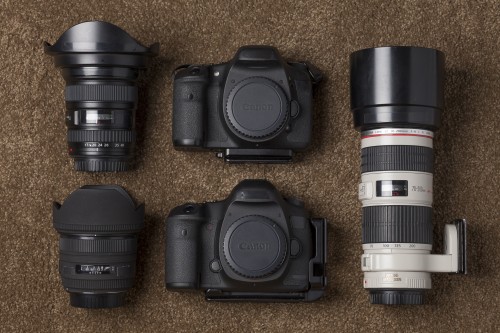
- The 17-40mm for interiors, architecture and landscapes
- 70-200mm for distant action, compression and details
- 50mm for low light and when I need something between the other two.
On my last notable trip with this collection of gear, 40% of the keepers came with the 17-40mm, 40% with the 70-200mm and 20% with the 50mm.
Pro Tip #2
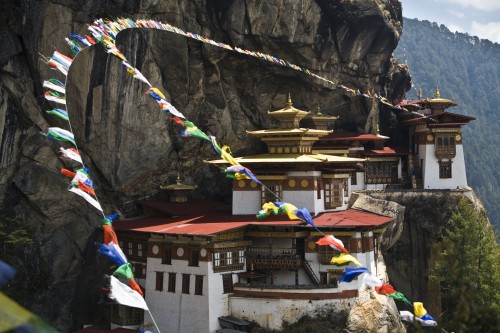
Sometimes it's a tough call, but using the 17-40mm is a great choice for capturing vibrant light and a rugged landscape like this one.
Photo Accessories
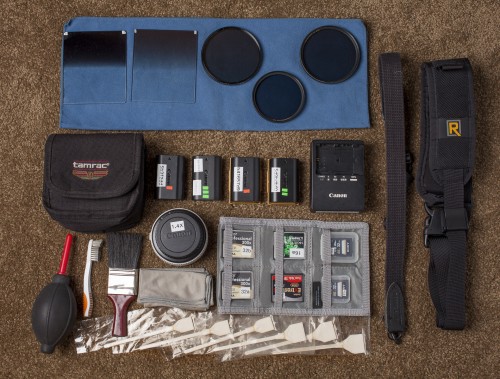
The following accessories are quite standard and trustworthy.
I've traveled in some areas with a lot of dust and dirt floating in the air so I have lots of cleaning gear: multiple cleaning cloths, brushes and sensor cleaning supplies. When shooting with filters I pull the filter case out and clip it onto my belt for easy access.
Canon Extender EF 1.4x III
This is really the perfect add-on to any Canon super telephoto lens. The communication between lens, extender and the actual camera body is phenomenal. It can be your best friend when trying to get up close to tough to capture images (sporting events, nature shots, etc).
3-Stop Graduated ND filter
2-Stop Graduated ND filter
No filter, and I mean no filter, can substitute for being in the right place at the right time when the light is just perfect. That said, all because you are travelling doesn’t mean that these types of moments will become more frequently. You still need to carry a few essential filters.
77mm Polarizer
77mm Slim Polarizer
Some people might see having more than one polarizer as excessive for a travel pack, but not having to share between lenses is a huge time saver, which can be the difference between getting that perfect shot from a bus window or before a sunset, etc.
Memory Card Wallet with Cards – Far too often people don't take proper care of their cards. You could argue that they are the most valuable piece of equipment in your bag near the end of your trip, so take great care of them with a solid wallet and plastic cases.
Filter case for 5 filters – Similar to the memory cards, keeping your filters in good shape is crucial. There's no point in carrying them around, weighing down your pack, if they aren't in condition to use.
Large cleaning cloth
2 x small cleaning cloth
Rocket Blower – With all the dirt and dust that you inevitably gather on your gear while on the road, a rocket blower is pretty crucial to have in your bag.
Old toothbrush - Yes, an old toothbrush.
Paintbrush
2 x camera straps -You'll have your camera on your shoulder all day. Get a quality strap.
4 x camera battery – If you find yourself in one of those picturesque places or moments, don't be the guy who doesn't have enough juice left in the battery to get the perfect shot. I feel that 4 batteries is more than sufficient for any day out shooting.
Battery Charger.
General Accessories
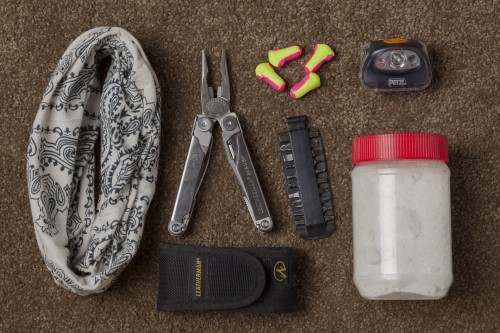
The five non-photography essentials I'll never leave home without are all small and very helpful on the road.
- The Buff works as a neck gator, hat and a cleaning cloth in a pinch.
- The Petzel headlamp is super small, very bright and has a red light for maintaining your night vision when shooting in the dark.
- The Leatherman Wave is great as it has replaceable tools that fit everything I might take. The only problem is that I can't carry it onto an airplane.
- The mystery white powder – detergent, for cleaning clothes in the sink.
- Earplugs for noisy campgrounds, thin hotel walls and loud airplanes.
John Greengo is a life-long resident of Seattle, and not surprisingly a typical Northwest outdoor adventure lover. He picked up his first camera at the age of 10, and has since been lucky enough to travel to amazing locations on all seven continents. Between major journeys, John teaches photography. He uses a unique blend of illustrations, animations and photographs, all of which makes learning photography easy and fun. John's teaching a free Travel Photography course on creativeLIVE this Friday (12-7 EST).
Saturday, June 14, 2014
Thursday, June 12, 2014
Thursday, January 23, 2014
Wednesday, January 22, 2014
Monday, December 30, 2013
Winter Photography
[[ This is a content summary only. Visit my website for full links, other content, and more! ]]
Saturday, November 30, 2013
Casa Dos Chicos: what summer villa dreams are made of
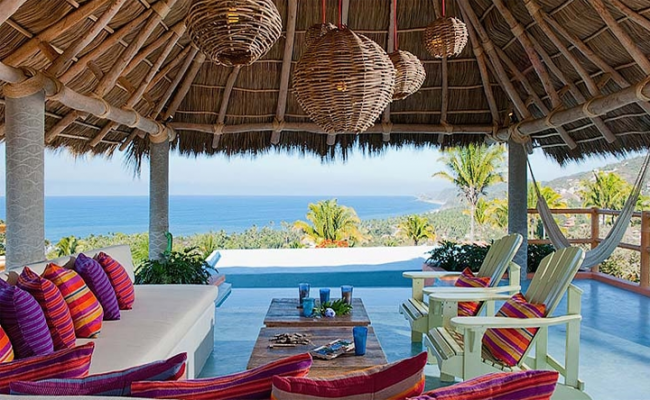
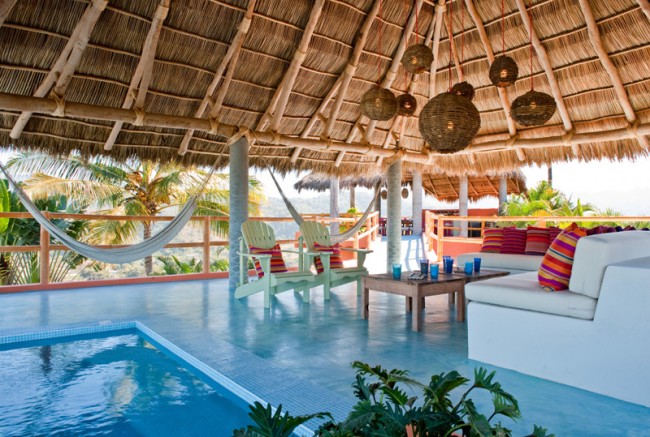
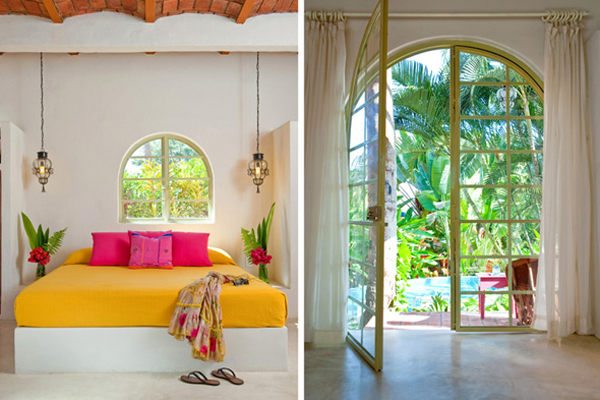
This vacation home located on the Riviera Nayarit, in the town of Sayulita, would make for a lovely summer villa. Situated on the Mexican Riviera, Casa Dos Chicos, is a beautiful three thousand square foot home, that sleeps up to 10 people.
MORE PICS
'Resume Baker' Custom Resume Design Giveaway: Make Youre Resume Stand Out!

|


Monday, September 9, 2013
Monday, May 13, 2013
Photography Bucket List – Cinque Terre, Italy
In this second installment of my ‘Photography Bucket List’ series we’re going to cover arguably one of the most beautiful places on earth; the Cinque Terre region on Italy’s west coast. I had the opportunity to visit this region on my first trip to Italy back in late 2011 and ever since then I’ve been waiting for the opportunity to get back.
A Quick Note On Traveling to Far Away Places
Chances are that if you’re reading this, you don’t live in or around Italy. A lot of people I talk to just accept that they will never get to travel to a place like this because it’s either too far away or too expensive to get there. Well I think that’s a load of crap. These places are a lot easier to get to than most people think, and a lot cheaper to stay in too. Life is what you make of it. If you want to go to Italy, make it a goal. Start saving up right now. Think of ways to raise money for it. Do research to find cheap plane tickets, cheap hotels or hostels. I can tell you right now that it will be worth every penny. Traveling, whether to Italy or any other part of the world, is an investment in who you are as a person.
"The world is a book and those who do not travel read only one page."
Augustine of Hippo"You are the same today that you'll be five years from now except for two things: the people you meet and the books you read."
Mac McMillan
About the Cinque Terre
The Cinque Terre is a rugged portion of coast on the Italian Riviera. It is in the Liguria region of Italy, to the west of the city of La Spezia. “The Five Lands” is composed of five villages: Monterosso al Mare, Vernazza, Corniglia, Manarola, and Riomaggiore. The coastline, the five villages, and the surrounding hillsides are all part of the Cinque Terre National Park and is a UNESCO World Heritage Site.
Over the centuries, people have carefully built terraces on the rugged, steep landscape right up to the cliffs that overlook the sea. Part of its charm is the lack of visible corporate development. Paths, trains and boats connect the villages, and cars cannot reach them from the outside. (source: Wikipedia)
My Experience

Riomaggiore at Dawn | James Brandon
During my stay in the Cinque Terre, I opted for a quaint little hotel in the town of Riomaggiore. I did extensive research on each of the five regions and settled on Riomaggiore for several reasons. The first reason was the scenery and the rugged landscape of this southernmost town in the Cinque Terre. The shoreline here is dramatic to say the least with it’s rocks shooting straight up out of the water and the homes built up along the cliffside. The boats in the harbor belong to the villagers who go out fishing every day and sell their catches to the local restaurants and families. The second reason was just how small and uncrowded Riomaggiore looked. Now don’t get me wrong, all of the towns are small and quaint, but Riomaggiore looked more so than the others. And I was right! My goodness this town had so much character and charm. The locals were so nice and welcoming. The little coffee shop had the best cappuccinos of my life. The restaurant across the street had incredible pizza and local beer and wine.
The terrain of Riomaggiore is not for the faint of heart. If you’re looking for a town to just relax at and take it easy, this one is not for you. Getting around by foot anywhere in Riomaggiore is not easy. The streets are incredibly steep and getting anywhere requires hiking. In fact, after a few days my calves and feet were so tired that it was even hard to walk downhill! But I didn’t care, the beauty of this town made it all worth it.
Where To Stay, Where To Eat
My wife and I stayed in Riomaggiore at the Locanda dalla Compagnia. You won’t see this hotel in the picture above as it’s around the corner and up the hill about 100 yards or so, right next to the church. The staff was incredibly nice and accommodating. We got in to Riomaggiore past dark on our first night and weren’t able to call ahead like we were supposed to. Therefore, the hotel lobby was closed and locked. We were freaking out. This was our first stop in Italy. We had just been on a plane for about 11 hours. Spent an entire day in the crazy city of Milan and then a 3 hour (if I remember correctly) train ride to Riomaggiore on two different trains. So when we finally got to our hotel at the end of a very long day, only to find it closed and locked, in a foreign country with all of our luggage, we were a little frustrated! Luckily for us, there were two young men drinking coffee in the lobby who let us in. They were from Israel and it was their last night in town. They unlocked the door to the lobby and let us use the phone to call the hotel owner who had left a note for us to call when we got in. The lady arrived about 15 minutes later and led us to our room. Phew! The view from our hotel was incredible. Although in town and away from the coast, we had a view of the main street in Riomaggiore looking down over the church. The room was a decent size with a small kitchen area and a big enough bathroom and I think we paid around 80 euros a night for it.

Boats floating in Riomaggiore’s harbor | James Brandon
As far as food goes, just pick a place! I can’t for the life of me remember the names of all the places we ate at and tried. In fact, I think just finding a place and trying it out is half the fun in a place like this. In the main part of town (around the corner in the picture above) there’s a small little place that serves great espresso and breakfast in the morning. It’s right across from another restaurant that has a covered patio eating area outside. I couldn’t even find this place on Google! The fact is, it doesn’t matter where you go. We only ate at one bad restaurant during our entire trip to Italy and it was so bad that we laugh about it to this day (it was in Bellagio on Lake Como). It was just part of the experience.
Things To Do
Oh there’s plenty to do! Traveling between the towns in the Cinque Terre is easy and there are several ways to do it. The easiest is by train. For just a few euros you can travel to any town you’d like and be there in just a few minutes. You can also travel by boat or hike along a trail that connects to each town. I would love to have hiked the entire trail but we ended up just doing the stretch from Riomaggiore over to Manarola; a hike along the edge of the cliffs overlooking the Mediterranean called the Via Dell’Amore (Pathway of Love). The towns in the Cinque Terre were extrememly isolated from eachother and the outside world until the past century. After WWII the trail between Riomaggiore and Manarola was established as a meeting point for girls and boys from the two villages and so the name came to be. The trail is breathtaking to say the least and I highly recommend taking the time to do it.
You can also take a dip in the mediterranean at any of the beaches, lay out and get a tan, shop at any of the local stores and galleries, or just spend the day exploring without any plans (my favorite).

A home in Riomaggiore | James Brandon
Other Parts of the Cinque Terre

The Beautiful Vernazza | Elia Locardi. Click image to see bigger!
Riomaggiore is just one of five towns in the Cinque Terre. Each town has it’s own charm, it’s own look and feel. While Riomaggiore is my personal favorite, Vernazza comes in a close second. Vernazza is probably the most well know of the five towns and probably the most photographed as well. It was also nearly destroyed back in 2011 by a flood and is just now getting back to normal. Most people I talk to who have been to the Cinque Terre stayed in Vernazza. It’s also Rick Steve’s favorite of the five towns.

Dreams In Color | Elia Locardi. Click image to see bigger!
The next on my list would be Manarola (seen above). This town is also very rugged, like Riomaggiore with a much larger coastline. It also may be the oldest of the towns in the Cinque Terre, with the cornerstone of the church, San Lorenzo, dating from 1338.

A sculpture carved out of the cliffs at a castle in Monterosso | James Brandon
Right behind Manarola on my list is Monterrosso. This town is probably the best town to stay in if you just want to relax and walk around. It’s very flat, has a great beach that stretches along the coastline and the town itself is quite huge. Probably the biggest of the five. We spent one evening here and had a great time. The reason it’s so low on my list is just that it’s not as dramatic, photographically speaking, as some of the others. You could easily spend a week here and get several portfolio quality shots, but it’s hard to rate these towns when they are all so amazing!
Last on my list would be Corniglia. Again, Corniglia is an amazing town and incredibly beautiful! The only reason it’s last is because it’s the only town in the Cinque Terre that isn’t on the coast. Instead, it’s nestled up in the cliffs surrounded by vineyards and terraces.
Conclusion
I hope everyone reading this will get a chance to visit this place in their lifetime. I (along with so many other photographers) have fallen in love with this place and can’t wait to go back some day soon. The scenery is jaw dropping, the people are nice and welcoming, the food is spectacular, the water warm enough to swim in, the weather perfect for hiking between towns and all the rest of Italy is just a quick train ride away. Folks…this place has it all!
Huge thanks to Elia Locardi for providing a couple of images for this article. His website Blame The Monkey is a great resource for any photographer and I highly recommend checking it out.
If you’ve been to the Cinque Terre region or are planning on going, be sure to chime in below! You can also find me on Twitter if you have any questions. Cheers!
Post originally from: Digital Photography Tips.
Check out our more Photography Tips at Photography Tips for Beginners, Portrait Photography Tips and Wedding Photography Tips.
Photography Bucket List – Cinque Terre, Italy
Thursday, March 21, 2013
The Road to The Life-Light // EP. 03 – The East Coast // World-Trip blog
The Road to The Life-Light // EPISODE 03 – We (Jordi & Daan) are making a world-trip to break our own boundaries and barriers. To grow as filmmakers and as human beings. That’s why we’ll also meet up with creative Directors around the world. To talk about how they keep pushing their barriers. Our trip around the world will take us from Buenos Aires, Miami, NYC, San Francisco, Las Vegas, L.A., Honolulu, Sydney, Auckland to Tokyo in just 4 months. The end result of this trip is an awesome blog and a film called "The Life-Light" which will be about personal breakthroughs and facing (y)our barriers. This project is also our graduation project for the HKU – Utrecht School of the Arts, The Netherlands.
In this episode we explore more of Miami and we’re making some shots for our film "The Life-Light" from the Miami skyline. We try to eat the biggest burgers we ever had and go for a walk on Ocean Drive in Miami South Beach at night. After our time in Miami we have to pack our bags to travel to The Big Apple, NYC, our next and third location of the world-trip! We’ll fly with American Airlines and in just a little over 2 hours we already arrive in THE big city. After one night in our hotel we get a nice surprise and of course we’ll show somethings of our first experiences in NYC!
Read more about this project and follow our journey at our site/blog thelifelightproject.com
Music:
Hillsong United – Stay and Wait (reloaded)
Jay-Z – Empire State of Mind (ft. Alicia Keys)
Monday, March 4, 2013
Travel Photography Inspiration Project: Japan
Not only will this be one of the longest Travel Photography Inspiration Project posts to date, it is one I am very excited to put together. All of the participants not only delivered high quality images, but they all also held true to my request to provide you, fellow DPS readers, with helpful tips, either about travel in Japan or about specific photos.
Japan is on my list of places to visit and that's just for the sushi. Putting together this post has opened my eyes to many of the beautiful areas of Japan as well as it backroads. I hope you enjoy this inspirational trip to Japan through the lenses of DPS readers. If you have a moment, click through on the hyperlinks for each artists' name to see more of their work.
Let's wander around Japan in today's installment of the DPS Travel Photography Inspiration Project.
And if you would like to be involved in the next country's post, drop me a line here.

Reflections in Time by Michael D.Keller
A part of old Japan, waiting for you to explore. After a while discard your map and just walk.

Hands of the Great Buddha, Kamakura by Angus McIntyre
Tip: Kamakura, just a short distance from Tokyo, has many beautiful temples.

Sunset dreams by Pamela Oliveras
One of the many fantastic year round sunsets.
Tip: Okinawa is nearly 1,000 miles south of Tokyo and is known as the Hawaii of Japan for its sub-tropical climate and fantastic beaches. It is easy to reach from mainland via one of the domestic airlines.

A-Bomb Dome, Hiroshima by Greg Knudsen
Surrounded by peace lanterns made by children, the A-Bomb Dome in Hiroshima Peace Memorial Park was left partially standing after the nuclear blast that leveled Hiroshima on August 6, 1945, hastening an end to WWII. Travel tip: The whole of Hiroshima Peace Memorial Park is a reminder of the horrors of war, yet now conveys a spirit of hope and peace.
We visited on the 59th anniversary of the bombing. Each anniversary and throughout the year, tens of thousands of origami cranes are delivered to the Children’s Peace Monument in memory of Sadako and her 1,000 cranes, whose story and some of her original cranes are among the displays in the haunting and moving museum.

Baby snow monkeys, Nagano Prefecture by Oscar Tarneberg
I took this photo in the Jigokudani valley near a town called Yudanaka-Onsen in Nagano prefecture. The lighting conditions were challenging, being dimly lit and steamy due to the hot volcanic spring water, meaning the shot required the use of a fast prime (135mm F2.0) and a lot of post-processing to boost the contrast and sharpness.

Political Self-Promotion by Draycat
A Japanese politician stands outside a station promoting himself.
Tip. Use a wide aperture to blur out ugly backgrounds and make the subject stand out. Also try and capture a moment that contains some action to create a more interesting shot, which tells more of a story.

Silent Prayers (Daisho-in, Miyajima) by Beck
There are hundreds and thousands of temples in Japan - you can try to go to them all, hit up just the most popular (or "touristy") ones, or be a little more adventurous and visit some of the smaller, lesser known sites. Daisho-in turned out to be one of my favourites - high up on a hill on the island of Itsukushima (also known more popularly as Miyajima) and with very few tourists about, we had the grounds of the temple almost entirely to ourselves. This allowed us to wander for as long as wanted, without crowds of people getting in our way, and to get as close as possible to the thousands and thousands of different statues and relics that coat the area. This was a great opportunity to practice taking photos from different angles - getting down low, shooting from up high, looking for reflections in ponds, and practicing a variety of other techniques such as working in AV mode rather than snap-happy-tourist-AUTO-mode.

Dragon of Izumo by Khoa Dinh
This is a statue of the mythical eight headed dragon that would terrorize the people of Izumo.
Advice: Take public transportation, subways or trains, while you travel in Japan. Taxis are expensive and traffic in Japan is horrible.

?????? (The Mikimoto Building) by Christopher Carlo Casilli
Tokyo is filled with interesting small scale architecture and the Mikimoto building is a favorite of mine. Looking to set it off and show it unique windows and facade, I decided to shoot this up angle in late afternoon to bring out the slight pink tones of the building reflecting the setting sun.

Hakone by Kishan Harwalkar
If you are visiting Tokyo on Business and have a spare day, then its best to book a day tour to Mount Fuji & Hakone or Nikku. Hop-on to one of the tourist buses and have a guided tour of your choice. You can go up to level 7 of Mount Fuji and also visit some beautiful regions in the area of Hakone. But beware, the traffic towards Tokyo in the evening (especially on weekends) is very heavy and expect delays.

Tokyo View by Simon Skipper
Tokyo is one of the largest cities in the world with the centre housing more than 13 million people. It’s worthwhile finding one of these tall buildings for a magnificent view, even in clear weather it’s difficult to see beyond the houses growing into the horizon.

Women of Tokyo by Michael Robert Powell
This juxtaposition of old and young was a lucky shot – I had my camera out just by chance. The out-of-focus background was softened futher by converting the image to black and white to give more attention to the older woman (as there was too much red around the young ladies).

Nagano House by Matt Gibson
Shooting at sunrise and sunset is always a good idea, but doubly so for travel photography when nearly all your shots are lit by sunlight. This shot turned out pretty much only because the sun was setting and the light was right.

Ueno Temple Roof by Michael D.Keller
This is from Ueno Park. A must visit for any first timer to Tokyo. It is halfway between Asakusa and Akihabara, on top of a few subway lines and the airport express. Keep your eye open for artifacts that spark interest.

Shinto priests, Hachiman-gu, Kamakura by Angus McIntyre
Tip: Shinto shrines and Buddhist temples are rich in colors and textures.

Faces of Eisa by Pamela Oliveras
10,000 Eisa dance festival. Naha, Okinawa

Deer at 5-Story Kofuku-ji Pagoda, Nara by Greg Knudsen
A day-trip out of Kyoto, Nara is filled with historic temples and pagodas, and hundreds of free-roaming deer.
Travel tip: The deer are semi-tame, but I saw a couple of stags clashing antlers, so stay clear. Nara also includes the world’s largest wooden building, Todai-ji Temple, with a massive 15m bronze Buddha inside.

Bamboo grove, Arashiyama, Kyoto Prefecture by Oscar Tarneberg
Arashiyama makes a great detour from Kyoto, as it is close by but also contains many temples, as well as incredible walks through bamboo groves, but without the crowds. This shot was taken several years ago on a camera with poor high ISO capability, so the main challenge was holding the camera steady enough to stop down enough to get a deep enough depth of field to get the whole path in focus.

Rush Hour Rush by Dreycat
A woman rushes to get to work during Tokyo morning rush hour.
Tip. The key to getting a shot like this is to use panning, where the camera is set to a low shutter speed and you track the movement of the person with your camera. You’ll often need a few attempts to get a good shot.

Kyoto Station by Beck
This shot was taken "from the hip" (literally) whilst I was waiting for a friend to join me at the station. I love people-watching but sometimes feel a little self-conscious doing it, especially as a foreigner who stands out in a country like Japan, and where traditional and personal values of the locals also make me hesitant to take photos of people. As such, I recently tried my hand at "shooting from the hip" and just waited to see what results I could achieve ... I didn't have my eye to the viewfinder nor could I see the LCD display - the camera was near my waist, I didn't have a lens disrespectfully shoved in anybody's face, and I simply clicked the shutter button. Sometimes it worked, sometimes it didn't - but I've discovered it's all about practice and having fun with it! You'll be astounded at some of the shots you can achieve.

Shibuya cross walk by Khoa Dinh
This is the busiest and most famous crosswalk in Japan.

?????????? (Crossing the Street in the Shinjuku Ward) by Christopher Carlo Casilli
Just outside the busiest train station in the world (JR Shinjuku in Tokyo) is a good place to really see the crowds typically frequenting this area of shops and restaurants…here on a warm summer’s eve. A slow shutter speed at night gave me that sense of a sea of motion set against the towering rows of tall buildings glowing with their bright vertical signs.

Shinjiku: Animation & Neon all around by Kishan Harwalkar
Shinjiku is the main place of Tokyo housing Business centers on one side and bars & restaurants on the other. You get a glimpse of two shades of Tokyo from this place. A must visit place.
Japan, is also a place were Animation is worshiped. You can see people engrossed in animation all around you. Be it the comic books, mobile phones or hoardings on the Road, everything is centered around Cartoon characters.

‘Mochi’ is a traditional Japanese meal of rice especially eaten during winter by Simon Skipper
Looking for someone making it the traditional way is highly recommended, as it takes up to six hours involving a huge hammer and numerous people.
Women-only train carriage by Michael Robert Powell
Often ordinary things offer a great photo opportunity. A simple composition here with a vignette added, to partially shadow her face. (Note: the women-only rule is limited to rush-hour; so I was able to sit here).
Japan Vending by Michael D.Keller
Vending Machines are everywhere, in numbers. Many today even let you pay by cell phone! Make use of them, they are convenient and relatively cheap.
Tuna, Tsukiji fish market by Angus McIntyre
Tip: If you are able to visit Tokyo’s Tsukiji fish market, remember that it’s a working market; tourists were recently banned after one group behaved badly.
Beach life: Northern Okinawa beaches in the summer by Pamela Oliveras
A 50mm lens would be a great all round lens to bring. A wide angle would also be an added bonus to capture the beauty of the landscapes and seascapes.
Summer is VERY VERY HOT and HUMID, but produces some thunderhead cloud phenomenal sunsets too. Nov it starts cooling down.
Ryoan-ji Rock Garden, Kyoto by Greg Knudsen
My wife and daughter “deep in meditation” at Ryoan-ji Rock Garden, a 500+ year-old zen temple and UNESCO World Heritage Site.
Travel tip: Kyoto, which should not be missed, is best reached from Tokyo by Shinkansen (Bullet Train). We bought a 7-day Japan Rail Pass, which also took us to Hiroshima, Nara, around Tokyo on the JR Line, and back to Narita Airport. You must purchase the JR Pass before you arrive in Japan.
Koya-san monks by Oscar Tarneberg
High in the mountains of Okayama prefecture, Koya-san it is the site of many ancient and holy temples. This shot was taken in the Oku-no-in graveyard, which is a fascinating and eerie place, particularly photogenic later in the afternoon when shafts of light come down through the trees.
Heavy Duty – A Sumo Training Stable by Drewcat
Sumo wrestlers training at a sumo stable in Tokyo.
Tip: Don’t be afraid to change your viewpoint and experiment with shutter speeds when taking action shots. Often getting low and close can make a stronger image than just shooting at eye level, while changing the shutter speed can help to inject more drama into the shot.
The Quiet Life (Asakusa, Tokyo) by Beck
A simple snapshot of a simple life in a back street of Asakusa, Tokyo, taken early in the morning on my way to the train station. I love to get up early and go exploring whenever I'm travelling somewhere - and as many people in Asia, including Japan, like to rise early, this is a great time to start shooting! The light is also far less harsh in the early and late hours of daylight, rather than the hours around midday (when you probably want to be out of Japan's heat and humidity any way!) - so don't be afraid to get up early and go to bed early on one or two days if you want to find some great shots with softer lighting.
Odaiba Island by Kishan Harwalkar
Odaiba, a manmade island claimed from sea is an ideal place to spend a day. It offers a nice view of Tokyo town and houses several interesting buildings. The Tokyo Museum of Engineering Science & Innovation, which houses Asimo, the famous Honda humanoid Robot, is worth a visit. After a visit to this museum during the day, you can explore the interesting places near the Fuji centre in the evening. There are several restaurants to have a drink and some good Japanese good. You should stay here when sun starts to set and the lights come up in Tokyo. It's a beautiful sight and a treat to watch. If you are lucky you'll also see Hannabis, the famous Fireworks which take place from time to time. You need to take a tripod to capture those lights n Fire works . For more details you can visit: http://www.japan-guide.com/e/e3008.html
The Monkey by Simon Skipper
These Japanese Macaques are very unique to Japan, living in the area of Jigokudani where they enjoy the hot thermal springs in a very intriguing way, almost obsolete to the fact that thousands of tourists are around at almost all times.
Temple roof-tops at dusk by Michael Robert Powell
Arriving before dusk at the Senso-ji Temple meant that flood-lights were already on – but it wasn’t dark yet, so the red paint glowed golden and orange. Using a telephoto lens and then later adding a digital vignette, I managed to get a somewhat surreal image.
Horses in a landscape, Mt Aso by Angus McIntyre
Tip: Despite the image of Japan as hugely urbanized, parts are surprisingly pastoral, offering opportunities to landscape photographers.
Kiyomizu-dera, Kyoto by Greg Knudsen
One of my favorite sites, Kiyomizu-dera is a nail-less wooden temple built in 1633 on a hillside along a waterfall and stream whose pure water is said to have wish-granting powers.
Travel tip: Most visitors enter from the west up a long narrow street leading straight up to the temple. However, my preferred approach is from the north, starting near Shoren-in and Chion-in temples, through Maruyama Park, past the 24m Ryozen Kannon statue, through cobblestone village streets, then joining the upper climb to Kiyomizu.
Mount Fuji, viewed from Kawaguchi-ko, Yamanashi prefecture by Oscar Tarneberg
Mount Fuji is the classic symbol of Japan, but getting a clean shot of it is harder than you think! Kawaguchi-ko, just a short journey from central Tokyo, offers stunning views with a range of natural foregrounds, including a lake. This photo was taken from a nearby hilltop around dusk for the best lighting; in March the air was relatively clear and the peak was still capped with snow.
Japanese School Days by Draycat
Two schoolgirls walk through the entrance to a temple.
Tip. This type of shot is all about patience; once you see the possibility for a shot you need to wait until all the elements are in place to get it. In this case it’s all about making sure the schoolgirls are in the right place and that there are no distracting factors, like other people, elsewhere in the image.
Kamakura Fortunes by Beck
These are hanging paper fortunes at one of the many temples in Kamakura, just south of Tokyo. The size of your aperture changes the depth of focus in your image, to create very different effects - but where exactly you make your point of focus (front, middle, distant) can also change the perception of the image. Mix it up occasionally to see what different results you can achieve - you may be quite pleasantly surprised!
The Buddhist by Simon Skipper
In Zenk?-ji, Nagano you find one of the oldest buddhist temples of Japan, built in the 7th century. The site remains one of the last religious pilgrimages of the country, and many of the locals are very interesting to photograph.
Post originally from: Digital Photography Tips.
Check out our more Photography Tips at Photography Tips for Beginners, Portrait Photography Tips and Wedding Photography Tips.
Travel Photography Inspiration Project: Japan